Aashish Arora’s 6-Month Banking Exam Preparation Roadmap

10th June 2026
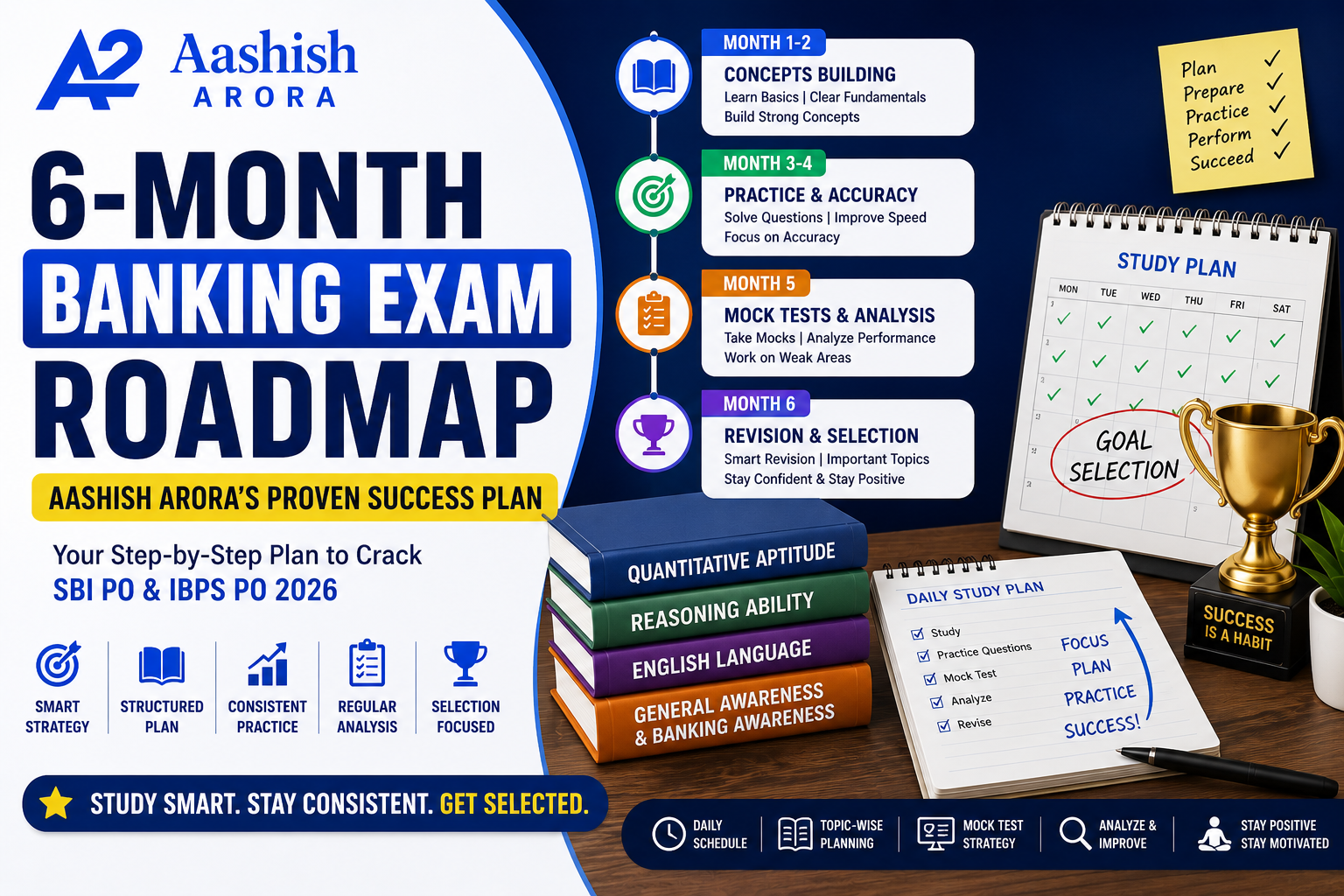
Banking exams continue to be one of the most popular career options among graduates in India. Every year, lakhs of candidates appear for exams like IBPS PO, IBPS Clerk, SBI PO, SBI Clerk, and RRB exams with the dream of securing a stable and rewarding government job. However, the competition is intense, and success requires a well-planned preparation strategy. Therefore, to master every element of banking exam preparation, it is best to take the help of an expert like Aashish Arora.
Why Does A 6 Months Preparation Plan Work?
A lot of students begin their preparation too late or dedicate months to studying without a well-defined plan. A 6-month timeframe offers an ideal opportunity. It provides aspirants enough opportunity to understand ideas, work through problems, highlight areas of difficulty, and conduct a complete review well ahead of the test.
The primary benefit of a 6-month approach is to reduce anxiety. Rather than hastily covering material, those aiming for success can steadily enhance their pace, precision, and confidence.
Month 1: Build Your Foundation
The 1st month should be dedicated to understanding the exam pattern and syllabus. Start by familiarizing yourself with the major sections:
- Quantitative Aptitude
- Reasoning Ability
- English Language
- General Awareness
- Computer Awareness
During this phase, focus on learning basic concepts rather than solving difficult questions.
Aashish Arora often highlights that strong fundamentals make advanced preparation much easier. Therefore, students should avoid jumping directly into mock tests during the initial stage.
Month 2: Strengthen Core Concepts
By the 2nd month, candidates should move beyond basic theory and start solving sectional questions. The goal is to improve understanding and accuracy. Focus on topic-wise practice and maintain a notebook for formulas, shortcuts, and important concepts.
For English, start reading newspapers daily. Editorial sections can significantly improve reading comprehension, vocabulary, and sentence structure.
So, when doing bank exam preparation, some of the key activities to do include:
- Solve Topic-Wise Quizzes Daily
- Revise Formulas Regularly
- Read Newspapers For At Least 20-30 Minutes
- Start Maintaining Current Affairs Notes
Month 3: Begin Mock Tests Preparation
The 3rd month marks an important transition from learning to application. Start taking one full-length mock test every week. Initially, scores may not be impressive, but mock tests help identify strengths and weaknesses.
After every mock test, spend time analyzing mistakes. This is where real improvement happens.
Ask yourself:
- Which section consumed the most time?
- Which questions were answered incorrectly?
- Were mistakes due to lack of knowledge or careless errors?
Month 4: Increase Speed & Efficiency
As the exam approaches, speed becomes increasingly important. In the 4th month, increase the number of mock tests to two or three per week. Alongside mocks, continue sectional practice for weak areas.
Students often struggle with puzzles, data interpretation, and reading comprehension. Dedicate extra time to these high-weightage topics. Try solving questions under timed conditions. This develops exam temperament and helps you become comfortable working under pressure.
According to Aashish Arora’s strategy, you must do this:
- 2-3 full-length mock tests
- Daily sectional tests
- Current affairs revision
- Formula revision
Month 5: Focus On Revision & Advanced Practice
The 5th month should revolve around revision and advanced-level questions. By now, you should have completed the syllabus at least once. Instead of learning new topics, focus on strengthening what you already know.
For banking exam preparation, create concise revision notes covering:
- Quant Formulas
- Reasoning Concepts
- Important Grammar Rules
- Banking Awareness Facts
- Monthly Current Affairs
Month 6: Final Preparation Phase
The last month is all about polishing your performance. Avoid starting any new topic unless necessary. Instead, focus on maintaining consistency and staying mentally prepared.
Take regular mock tests and simulate actual exam conditions. Analyse performance carefully and make minor adjustments to your strategy.
Aashish Arora’s advice to the students is to trust their preparation during the final stage instead of experimenting with completely new strategies.
Aashish Arora Helping You In Banking Exam Preparation
Aashish Arora’s 6-Month Banking Exam Preparation Roadmap is designed to help aspirants prepare with clarity, confidence, and consistency. Instead of overwhelming students with endless study plans, his structured approach focuses on building strong fundamentals, strengthening concepts, improving speed through mock tests, and mastering revision at the right time. From understanding the syllabus in the first month to refining exam strategy in the final phase, every step is crafted to maximize performance and reduce exam stress.
Start Your Bank Exam Preparation The Smart Way By Following Aashish Arora’s Proven 6 Month Roadmap And Move One Step Closer To Your Dream Banking Job.
The Final Word
Cracking a banking exam is not solely about prolonged study sessions; it’s about intelligent and regular preparation. Aashish Arora’s 6-month strategy for banking exam success offers a well-rounded method integrating understanding core concepts, frequent application, simulated exams, review, and evaluating your progress. So, aspirants need to maintain regularity, have faith in the system, and continue progressing. Your aspiration for a banking profession might be nearer than you realise with effective banking exam preparation.
FAQs
Q) Why is a 6-month preparation plan ideal for banking exams?
Ans) A 6-month study schedule offers enough time to understand ideas, practice diligently, pinpoint areas needing improvement, review completely, and improve both speed and precision without feeling rushed.
Q) Which banking exams can this roadmap help you prepare for?
Ans) This study guide is appropriate for prominent banking exams like IBPS PO, IBPS Clerk, SBI PO, SBI Clerk, and Regional Rural Bank (RRB) tests.
Q) Why does Aashish Arora’s focuses on building strong fundamentals?
Ans) As per Aashish Arora, a robust foundational knowledge simplifies the understanding of advanced subjects and enables you to tackle difficult problems with increased confidence and accuracy.
Q) Should I start taking mock tests in the first month?
Ans) No. The first month should be dedicated to establishing a core understanding. Mock tests are more effective after you have developed a solid understanding of the syllabus and basic concepts.
Recommended for you
Best books for bank exam preparation 2026: SBI PO, IBPS PO and Clerk

Top Reasons Students Prefer Aashish Arora for Banking Exams