The Biggest Lessons I Learned From Competitive Exams

26th June 2026
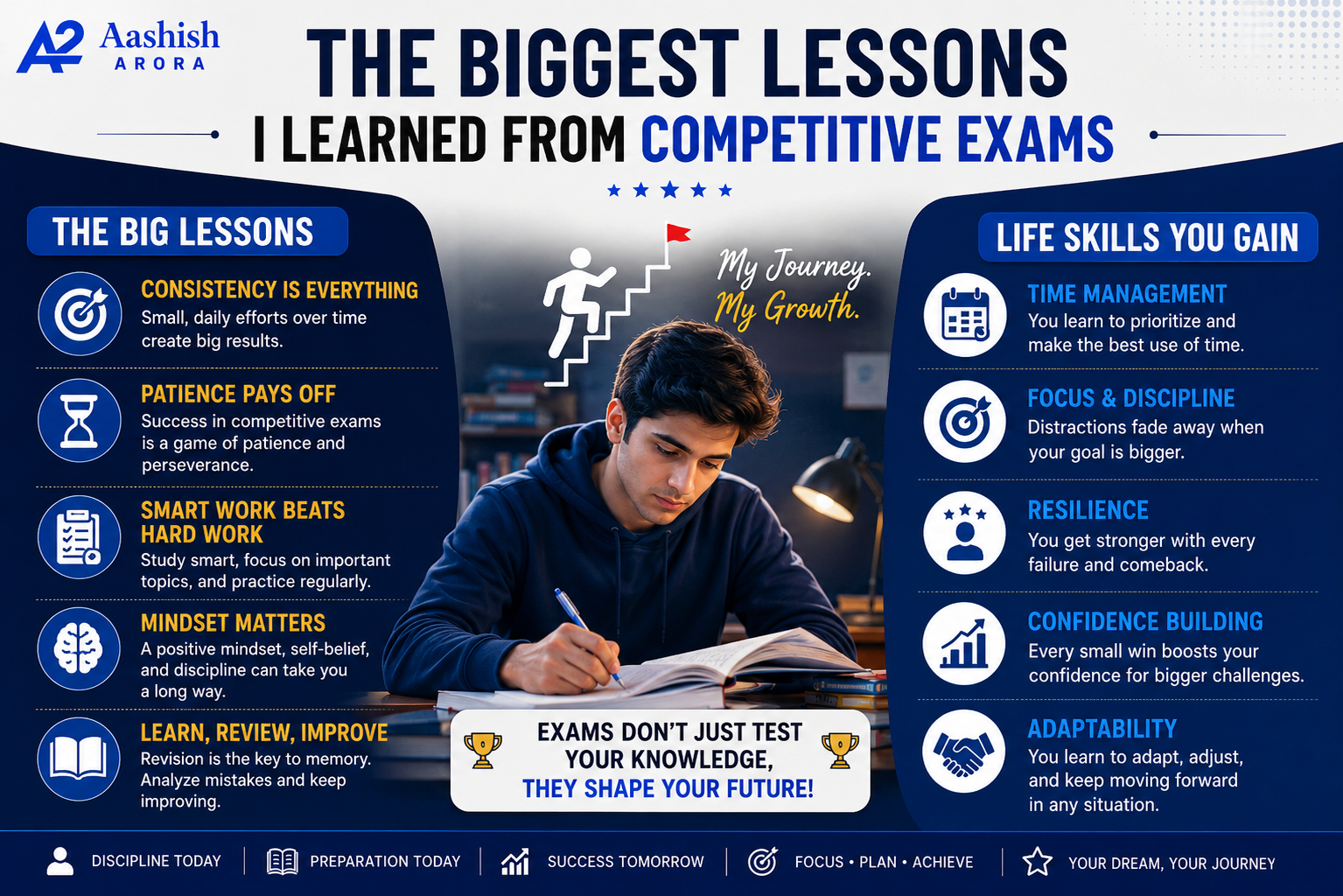
Competitive exams are often viewed as a measure of knowledge, yet after dedicating months to preparing for them, I discovered they impart far more than equations, data, and theories. Be it entrance exams, government hiring evaluations, or scholarship competitions, the process of preparation transformed how I think, operate, and tackle obstacles.
Reflecting, I might not recall every topic I reviewed, but I vividly remember the insights that lingered long after the exams concluded. These lessons moulded my perspective and fostered my development not only as a learner but also as an individual.
Consistency Matters More Than Motivation
When I first began preparing, I thought that staying motivated was the key to success. I watched inspiring videos, read stories of achievements, and felt excited about my goals. But that excitement didn’t last forever.
There were days when I felt full of energy and got a lot done, but there were also days when I had no desire to study. What I came to understand is that successful preparation doesn’t require feeling motivated every single day.
Hard work Alone Is Not Enough
In the early stages of preparation, I spent many hours with my books open in front of me. Yet my results in mock tests didn’t improve much. Eventually, I realised that working smart is just as important as working hard. Understanding concepts, spotting my weaknesses, revising in a thoughtful way, and practicing questions efficiently made a bigger difference than just adding more study hours.
Failure Is A Teacher And Not An Enemy
Mock tests were often frustrating. Sometimes I scored far lower than I expected, even after putting in a lot of effort. At first, every poor score felt like a personal failure. Over time, I learned to see mistakes in a different light. Every wrong answer pointed to a gap in my preparation. Every disappointing result showed me where I needed to get better.
Comparison Can Be Dangerous
During preparation, it’s easy to compare yourself with others. Some students finish the syllabus faster, solve questions more quickly, or always get higher scores in tests. I spent a lot of time worrying about how others were doing. The problem was that comparing myself to them rarely helped me feel motivated. Instead, it brought unnecessary stress and self-doubt.
Time Management Is A Life Skill
Doing competitive exams preparation made me understand the true value of time. With an extensive syllabus and limited hours, every moment counted. I learned to plan schedules, prioritise essential tasks, and steer clear of distractions. More importantly, I realised that being occupied is not the same as being efficient.
Social media, too much screen time, and procrastination often ate up more of my day than I noticed. Controlling these distractions allowed me to use my time more wisely.
Mental Health Is As Important As Preparation
While there is plenty of talk about study plans and methods, mental health often receives less attention. There were times when I felt drained, anxious, and overwhelmed. The weight of expectations, competition, and uncertainty sometimes became tough to bear.
In those moments, I discovered the value of resting, sleeping enough, staying active, and talking to understand people. A worn-out mind cannot do its best, no matter how long it studies.
Discipline Creates Freedom
Initially, I saw discipline as limiting. Sticking to a schedule felt dull and challenging. But as I kept preparing, I realised that discipline actually lessened stress. When I followed a routine, I knew what to do and when. I spent less time deciding and worrying about tasks left undone.
Success Is Not Always Immediate
There were weeks when I studied regularly but saw little change in my test scores. Competitive exams preparation taught me to be patient. Learning takes time. Progress often comes slowly and becomes clear only after consistent effort over weeks or months.
This experience helped me build resilience. Sometimes growth occurs even when you cannot see it immediately.
Self-Belief Makes A Huge Difference
I faced moments of self-doubt, especially after tough practice tests or difficult subjects. In such times, confidence was as crucial as preparation. Believing in yourself does not mean expecting everything to go smoothly. It means trusting that you can face obstacles and keep pushing ahead.
Aashish Arora: Helping You With Competitive Exams Preparation
Competitive exams preparation is more than just earning top ranks, they help build the mindset essential for success in life. Over years of mentoring aspirants, Aashish Arora has steadily highlighted the qualities that actually count: consistency over motivation, working smart rather than endlessly, learning from setbacks, managing time wisely, and trusting yourself even when results don’t come right away. His real-world advice guides students to see beyond scores and cultivate the discipline, resilience, and self-assurance needed to thrive in competitive exams, especially in mastering Quantitative Aptitude.
Learn From Aashish Arora & Transform Your Exam Preparation Into A Journey of Growth, Confidence & Success.
The Final Word
Competitive exams tested me academically, yet their greatest influence was personal. They instilled in me steadiness, discipline, endurance, mental toughness, and self-reflection. They taught me how to cope with stress, grow from setbacks, and persist even when progress felt sluggish.
Whether the outcome was achievement or letdown, the process itself offered insights that stretched well beyond the exam room. Years after, those insights still shape how I learn, work, and face life’s hurdles.
FAQs
1. Q) Why is consistency more important than motivation in competitive exams?
Ans) Motivation goes up and down, but consistency helps students keep moving forward even on tough days. A disciplined study routine leads to steady progress and stronger performance over time.
2. Q) Is hard work enough to crack competitive exams?
Ans) No. Hard work is important, but working smart matters just as much. Understanding key ideas, spotting weak points, and practising with a clear approach often bring better results than just putting in more study hours.
3. Q) How can mock test failures help in exam preparation?
Ans) Failures in mock tests point out mistakes and areas where knowledge is lacking. Reviewing these errors allows students to sharpen their preparation and steer clear of making the same mistakes in the actual exam.
4. Q) How does time management impact competitive exam success?
Ans) Good time management lets students cover the syllabus more effectively, focus on key topics, and ease last-minute stress. It also cuts down on distractions and boosts productivity.
Recommended for you
Best books for bank exam preparation 2026: SBI PO, IBPS PO and Clerk

Top Reasons Students Prefer Aashish Arora for Banking Exams